
Most people know Sugarbush for skiing. When snow blankets Lincoln Peak and Castle Rock, the resort buzzes with skiers and snowboarders from December through April. But when the lifts stop running, and the snow melts away, Sugarbush transforms into something different: a vast network of hiking trails that climb through Green Mountain forests to ridgeline views most winter visitors never see.
You’ll find everything from easy loops near the base to challenging summit hikes that connect with Vermont’s Long Trail. If you’re staying at our lodging in Vermont, Sugarbush’s summer trails offer a different way to experience terrain you might have skied past all winter.
When Sugarbush Opens for Hiking
Sugarbush’s hiking trails usually open in late May or early June, depending on how quickly the ground dries after mud season, and stay open through late fall, closing again in November when the resort starts preparing for ski season.
If you’re planning a visit during mud season (late March through early May), you’ll notice that most trails stay closed to protect them from damage. The paved Sugarbush Access Road path stays open year-round, though, so you can still get out for a walk or bike ride.
Before you head up the mountain, download the trail map from Sugarbush’s website. Cell service gets spotty once you’re on the trails, and having the map saved on your phone makes a big difference when you’re trying to figure out which way to go.
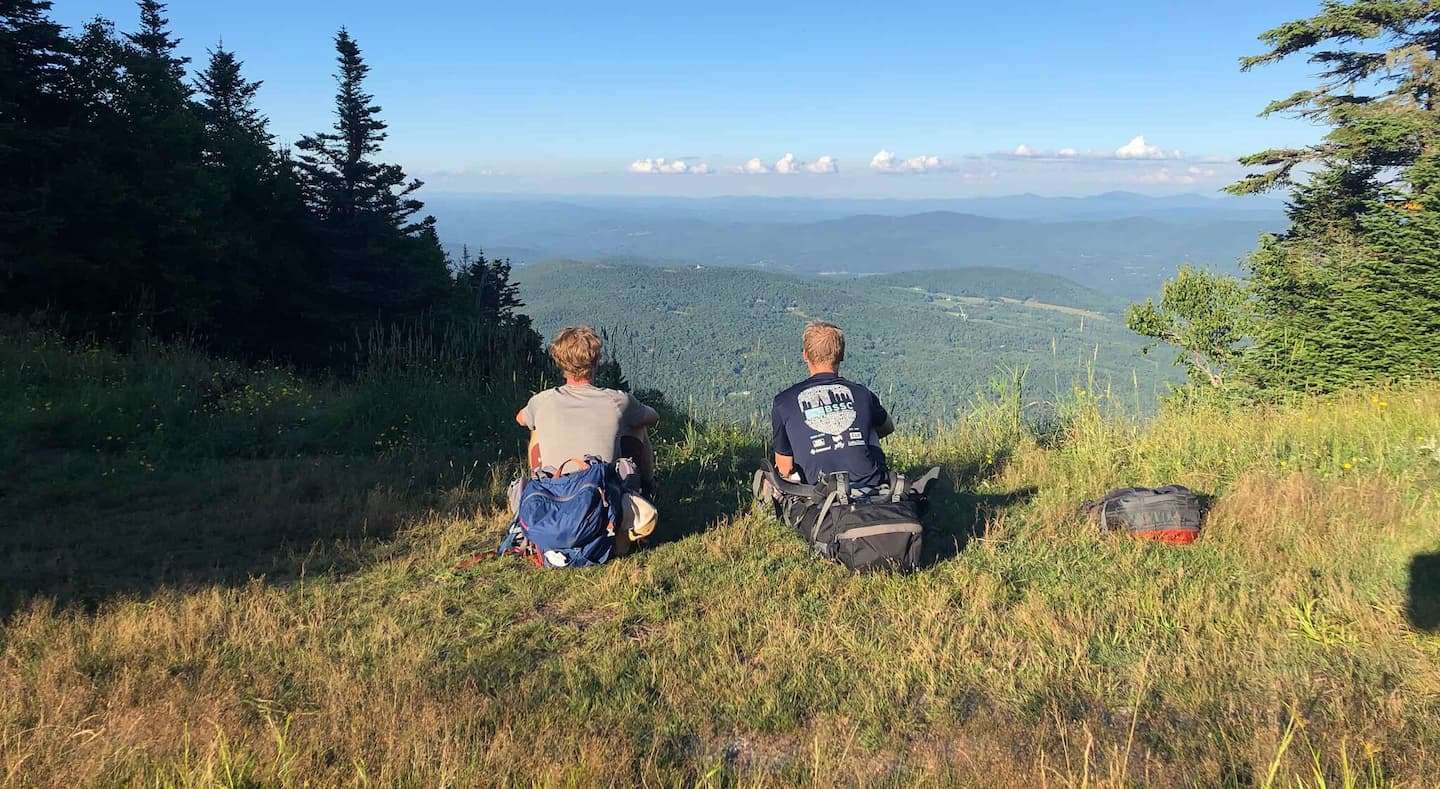 Hiking at Sugarbush:
Sugarbush’s summer trails follow ski runs, work roads, and connector paths across the mountain. Some sections are steep, and most are well-maintained but can still be rugged, with roots, rocks, and uneven terrain, so proper footwear is important no matter which trail you choose.
Lollipop Loop
Easy | 1.1 miles | 100 feet elevation gain | 30 minutes to 1 hour
This is the trail we recommend for families with young kids, or if you just want to stretch your legs without committing to a big climb. It loops through woods near the base area, never gets too steep, and you’re close enough to the resort that you can easily head back if needed.
Gate House Woods Loop
Moderate | 2.5 miles | 750 feet elevation gain | 1.5 to 2 hours
Half of this loop follows a work road, which makes for easy walking. The other half cuts through the woods on a more rugged trail where you’ll navigate roots and rocks. You’ll climb enough to get views of the base area and the valley, then descend via one of the ski trails.
Sleeper Road to Castle Rock Run Out Loop
Moderate | 3.1 miles | 750 feet elevation gain | 1.5 to 2 hours
This one starts at the Gate House lift area and climbs Sleeper Road to the top of the lift. You’ll get valley views from up there before heading back down via Castle Rock Run Out. The whole route stays on work roads and ski trails, so it’s less technical than Gate House Woods but with similar climbing.
Lower Jester to Allyn’s Lodge
Moderate | 2 miles one way | 1,600 feet elevation gain | 1 to 1.5 hours up
This is where things start getting real. You’re climbing from the base to mid-mountain on a steady uphill that doesn’t let up much. But once you reach Allyn’s Lodge, you’ve got options. If it’s a holiday, and the Valley House lift is running, you can ride it back down. Or you can keep going to the summit. Or just turn around and hike back the way you came.
Heaven’s Gate Summit from Allyn’s Lodge
Moderate | 2 miles round trip from Allyn’s Lodge | 700 feet additional elevation gain | 1.5 hours
If you’re already at Allyn’s Lodge and feeling good, the summit is another climb up Jester ski trail. At the top, there’s a large observation deck with views in every direction and access to Vermont’s Long Trail.
Lincoln Peak sits at 3,975 feet, and on clear days, you can see across the Mad River Valley and out to the Worcester Range. The Long Trail runs north-south along the ridgeline, so you’re connecting with Vermont’s main hiking corridor up here.
Castlerock Summit
Hard | 6 miles round trip | 2,300 feet elevation gain | 5 to 7 hours
This is a full-day commitment. You’re climbing to Castle Rock Peak at 4,083 feet via Castle Rock Run Out and Troll Road. At the top, you’ll find the Castle Rock Hut and views looking east.
We tell guests who want to do this one: start early, bring plenty of water, pack lunch, and plan on it taking most of your day. This isn’t a casual hike.
Trail Etiquette and Safety
Some Sugarbush trails are multi-use, shared by hikers and mountain bikers. When you encounter bikers, step to the side and let them pass. They’ll typically call out “on your left” or “on your right” as they approach.
Stay on marked trails. Cutting switchbacks erodes the mountain and damages vegetation. Respect all signage, especially around construction zones and re-vegetation areas.
How Sugarbush Fits Into Mad River Valley Hiking
Sugarbush’s trail network is part of the Mad River Valley Trails Collaborative, a partnership between local organizations, property owners, towns, the state, and the U.S. Forest Service. The collaborative maintains areas across the valley, creating a connected network of hiking trails in the Mad River Valley.
The Long Trail: Vermont’s 273-mile footpath runs along the ridgeline above Sugarbush. You can access it from the Lincoln Peak summit and hike north or south.
Mad River Path: A gentle, valley-floor walking and biking path that runs through Waitsfield. Good for easy family outings.
Warren Falls: Another swimming spot with short trails. It gets crowded on hot weekends.
Why Visit Sugarbush After Ski Season
Sugarbush in summer is a lot quieter than in winter. The resort’s still operating, but without the ski season crowds. You’ll see other hikers on the trails, but you’re not fighting for parking or waiting in lines for anything.
The mountain looks completely different without snow. Trails you might have skied down in winter become uphill climbs in summer. Terrain that looked smooth under snow shows what it really is: rocks, roots, all the natural stuff that snow had covered up.
If you only know Sugarbush as a ski resort, summer hiking gives you a different way to see it. You’re moving slower, noticing more. The afternoon light through the trees, wildflowers along the trail edges, and bird calls in the forest.
 Plan Your Vermont Hiking Trip
Our four lodges sit just a short drive from Sugarbush Resort, giving you easy access to the mountain while offering a quieter place to unwind at the end of the day. After hours on the trails, come back to your private room or suite, kick off your boots, settle in, and unwind.
Book your stay and experience hiking in Vermont with a home base that feels just as inviting as the trails themselves.
The post Vermont Hiking Beyond the Slopes: A Different Side of Sugarbush Resort appeared first on Mad River Lodges.