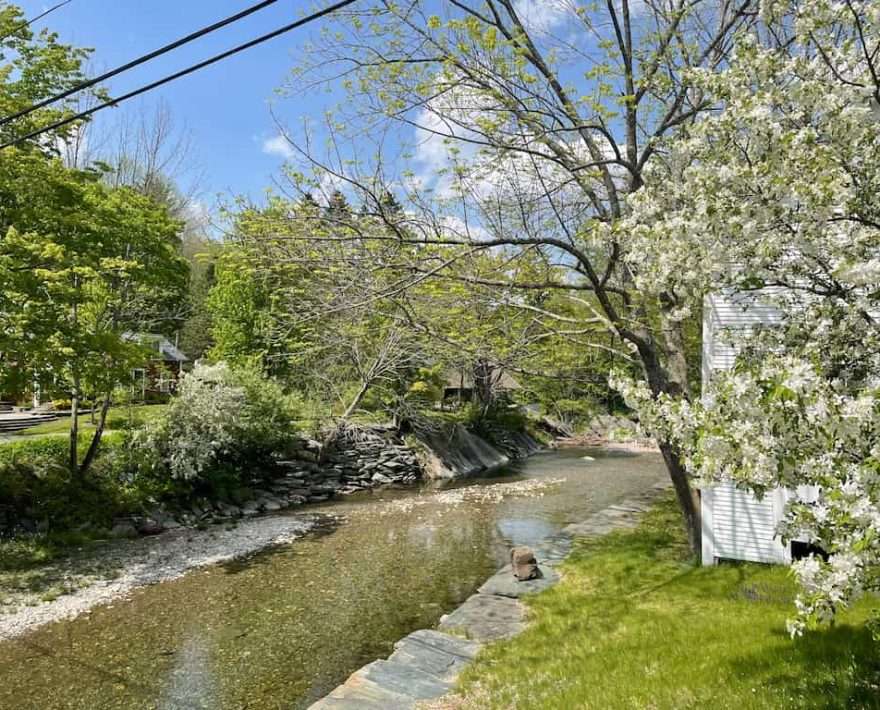
When mud season finally ends in the Mad River Valley, usually sometime in early May, Vermont doesn’t ease into spring. It explodes. One week, the forest floor looks brown and dull. The next, it’s covered in wildflowers racing against time to bloom, set seed, and disappear before the trees leaf out.
If you’re looking for things to do in Vermont during May and early June, wildflower walks and garden visits offer a side of the state most visitors miss.
When Wildflowers Bloom in Vermont
We get asked about this a lot: when can you actually see Vermont wildflowers?
The earliest bloomers show up in mid-to-late April if the weather cooperates. But May is when spring wildflower season really hits. From early May through early June, Vermont’s forests fill with what botanists call spring ephemerals, wildflowers that sprout, bloom, set seed, and disappear completely by summer.
The timing shifts depending on elevation and how warm April was. Lower valleys bloom first, higher elevations follow a week or two later. By late June, most spring ephemerals are gone.
What You’ll See: Common Vermont Spring Wildflowers
These native Vermont flowers are small, delicate, and easy to walk past if you’re not paying attention. But once you start looking, you’ll see them everywhere. These are some of the first Vermont flowers to appear after winter.
Trillium comes in white, red, and painted (white with pink streaks). The three-petaled flowers sit on top of three leaves. White trillium blankets the forest floor in rich hardwood areas. Red trillium, also called wake-robin, appears earlier and has darker, maroon flowers that smell faintly of rotting meat to attract pollinating flies.
Trout lily covers hillsides in yellow blooms. The mottled leaves look like brook trout markings, hence the name. Each plant takes years to produce its first flower, so large colonies indicate old, undisturbed forest.
Spring beauty has small white to pale pink flowers with darker pink veins. These tiny blooms grow close to the ground and provide early food for native bees.
Bloodroot gets its name from the red sap in its roots. The single white flower has 8 petals and a golden center. When it first emerges, the leaf wraps completely around the flower bud. Bloodroot blooms for just a few days.
Hepatica blooms as early as the first week of April if the weather allows. The flowers come in white, pink, or deep blue and close on cloudy days to save energy. The name comes from the leaf shape, which resembles a liver.
Wild columbine grows on sunny ledges and cliffs, producing distinctive red and yellow flowers that hang like little bells.
Jack-in-the-pulpit has a hooded flower (the pulpit) that shelters Jack (the spadix). The whole structure is striped green and purple.
Dutchman’s breeches look exactly like tiny white pantaloons hanging upside down on a line. They grow in rich woods and disappear entirely by summer.
Most of these flowers are fleeting. Some only bloom for a few days. Many take years to produce a single flower. That’s why the rule on Vermont wildflower walks is simple: look but don’t pick.
Where to Find Spring Wildflowers in the Mad River Valley
You don’t need to go far from our lodges to find spring wildflowers. They appear along roadsides, at the edges of fields, and throughout the forest.
The Mad River Path runs through Waitsfield and offers easy, flat walking where you’ll find coltsfoot, spring beauty, and early roadside bloomers without any serious hiking.
Around Warren Falls, short wooded paths pass through classic northern hardwood forest where trout lily, trillium, and other ephemerals thrive.
Sugarbush Resort trails (once they open after mud season) climb through forests where spring ephemerals bloom on the sunny forest floor before trees leaf out.
In truth, almost any woods walk in May will reveal wildflowers. If you’re in a forest of sugar maple, beech, and birch, look down, and you’ll start to see them everywhere.
Wildflower Photography
If you’re bringing a camera, a few things help:
Get low. Most spring wildflowers grow close to the ground. You’ll take better photos lying on your stomach than standing over them.
Visit on sunny days. Many spring ephemerals partially close in cloudy weather, so blooms are more open and vibrant when the sun is out.
Come early or late. Morning and late afternoon light works better than harsh midday sun.
Don’t pick or move flowers for a better shot. Bloodroot, trillium, and many others are sensitive to disturbance. Moving them damages the plant, and picking them can prevent seed production.
What to Bring on Wildflower Walks
Spring in Vermont means variable weather. Pack layers, including a light jacket, even if the morning starts warm. Temperatures drop quickly if clouds roll in.
Wear waterproof hiking boots. Trails dry out by May, but muddy spots persist in shaded areas and low sections.
Bring water and snacks, especially if you’re hiking rather than just walking the Mad River Path.
A field guide helps if you want to identify flowers beyond the common ones. The
Vermont Land Trust and
Green Mountain Club both publish resources on Vermont wildflowers and where to find them.
Insect repellent becomes more important as May progresses. Black flies emerge in late May and early June, coinciding with late spring wildflower blooms.
Garden Tours & Cultivated Blooms
While wildflowers define early spring, local gardens begin to come alive by late May and early June. You’ll start to see cultivated blooms, landscaped spaces, and small garden displays opening up throughout the valley.
Mad River Valley Arts Garden Tour
Every summer (usually mid-June), Mad River Valley Arts hosts a
Garden Tour & Garden Party that opens private residential gardens throughout Waitsfield and Warren. These aren’t wild Vermont flower displays. They’re thoughtfully designed perennial gardens, vegetable gardens, and landscaped properties that show what grows well in the Mad River Valley’s climate.
Artists often paint in the gardens, local artisans sell their work, and you can create your own floral bouquets. It’s one of Mad River Valley Arts’ major fundraisers and gives you access to gardens you’d never see otherwise.
Tickets are available through Mad River Valley Arts or at their gallery at 5031 Main Street in Waitsfield.
Von Trapp Greenhouse Open Garden Days
While the
von Trapp Greenhouse is now closed to the public through most of the year, they open their display gardens to visitors several times during the summer on select dates in July, August, and September. The lush display garden features mainly perennials and shrubs arranged in ways that show what thrives in Vermont’s growing conditions.
Check their schedule before you go, and bring cash as that’s often the preferred payment method for admission.
If you’d like to bring that feeling back to your room, we also offer
seasonal flower arrangements as an add-on to your stay. Thoughtfully designed with fresh blooms, it’s an easy way to surprise someone or add a little extra color to your visit.
 Where to Stay for Vermont Wildflower Season
Our
four lodges in the Mad River Valley put you within easy reach of wildflower walks and hiking trails throughout Waitsfield and Warren.
Book your stay with us for May or early June, and catch wildflower season at just the right moment, when the forest floor comes alive, and spring in Vermont feels like it’s happening all at once.
The post
Spring in Vermont: Following the Wildflowers in the Mad River Valley appeared first on
Mad River Lodges.